 jill
 October 7, 2017
 jill
October 7, 2017
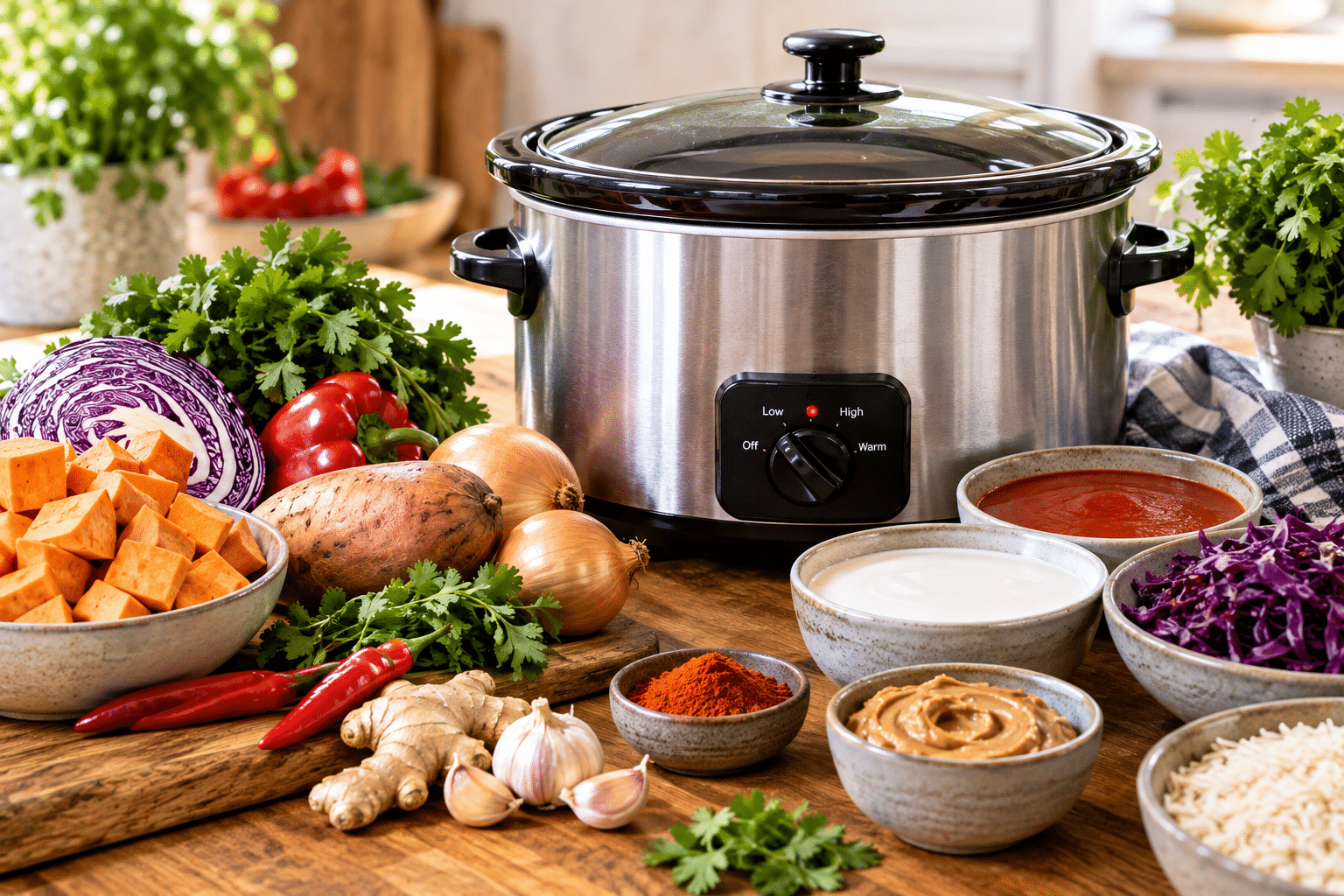
It’s common knowledge amongst the team that the most-used tool in my kitchen is the slow cooker.
Why? Because I’m busy (aren’t we all?), but I don’t want to sacrifice good training nutrition in the process.
When you’re training consistently, nutrition has a job to do. You need enough energy to support your training, the nutrients to support recovery, and meals that fit around everything else life demands of you.
That’s where the slow cooker earns its place in my kitchen. It makes it easier to have a nourishing meal ready when training is done and time is short.
One of the biggest advantages of a slow cooker is the time it gives you back. A little preparation, a few ingredients, and you can leave dinner to cook while you get on with the rest of your day. Six to eight hours later, you have a meal ready to serve that ticks the boxes of training nutrition.
For endurance athletes planning to put in long, slow hours on the road this winter, there’s something to be said for putting a few long, slow hours into your slow cooker, too.
The slow cooker isn’t a magic nutritional tool, but because you retain the cooking liquid, nutrients that move from the ingredients into the liquid stay in the meal rather than being thrown away.
It’s a practical way to prepare meals using a variety of vegetables, pulses and other ingredients, with very little attention needed once cooking is underway.
Slow cooking works particularly well for tougher cuts of meat, helping them become tender and enjoyable to eat. It can also soften vegetables and legumes, making them useful additions to hearty, satisfying meals.
And because you can cook larger quantities in one go, you may have enough for another meal or two. I’m a total fan of ‘cook once, eat twice’.
For athletes, this can be particularly useful. When you’ve finished a long ride or a demanding training session, the last thing you may want to do is start preparing a meal from scratch. Having something nutritious ready to heat and eat makes it easier to get on with refuelling and recovery, rather than leaving it until much later.
Ultimately, that means less time cooking during the week, fewer last-minute food decisions and one less thing to think about when training, work and family life are competing for your attention.
For me, that’s the real benefit. Good nutrition doesn’t have to be complicated, but it does need to work with your life.
Here’s a recipe we use regularly at BarrUltra.
Ingredients
Method
Serves 4.
There’s plenty to like about this recipe from a nutritional perspective.
Red cabbage brings colour, fibre and vitamin C to the dish. Its rich purple-red colour comes from anthocyanins, naturally occurring plant compounds. It’s a good reminder of why including a variety of colourful vegetables in our diets is worthwhile.
Sweet potato is a carbohydrate-rich source that also provides fibre, making it a valuable ingredient for active people who need to replenish energy stores. It’s also rich in beta-carotene, which the body can convert into vitamin A, a nutrient involved in normal immune function and vision.
Peanut butter contributes some protein and unsaturated fat, as well as flavour and a lovely creamy texture. The amount in this recipe won’t turn it into a high-protein meal, but it adds to the overall nutritional value.
And the coconut milk? It helps bring everything together, adding flavour and texture. Coconut contains medium-chain fatty acids, which are metabolised differently from longer-chain fatty acids. Although coconut milk isn’t equivalent to the concentrated MCT oils used in performance research, it’s an ingredient that contributes to the overall energy content of the meal.
For endurance athletes, the priority is always to eat enough overall and get the right balance of carbohydrate, protein and fat to support training and recovery. Including a variety of foods that contribute to energy production and wider nutritional needs simply makes sense.
Serve the casserole with rice, adjusting the portion to suit your appetite, training load and recovery needs. The sweet potato and rice provide carbohydrate to help replenish glycogen stores after training, while the vegetables contribute fibre and a range of vitamins and minerals.
If you’re using this as a substantial post-training meal, you could also add a protein source such as chicken, tofu or chickpeas, depending on your preferences. This helps make the meal more useful for muscle repair and adaptation.
As always, the amount you need depends on the training you’ve done, what you’ve eaten throughout the day and when your next session is due.
The best meal is one that works for you, both nutritionally and practically.
Whether you’re training for an ultra-endurance event or simply trying to eat well around a busy life, a little preparation can make a big difference.
You don’t need to cook everything from scratch every day, and you don’t need every meal to be perfect. Finding a handful of reliable meals, keeping useful ingredients to hand and making extra portions when you can are simple ways to make good nutrition easier to sustain.
For us, the slow cooker earns its place in the kitchen because it helps us do exactly that.
I’ll continue to share recipes that work for us at home and around training. And if you have a slow-cooker favourite of your own, I’d love to hear about it.
Happy cooking!
Good nutrition should support your ambitions, not complicate your life.
At Nutrition with Jill, I help you make sense of what your body needs and build a personalised approach to fuelling, recovery and everyday nutrition that works with your training, your goals and your life.
If you’re ready to make your nutrition work harder on your behalf, let’s start a conversation.
 PREV
 NEXT